

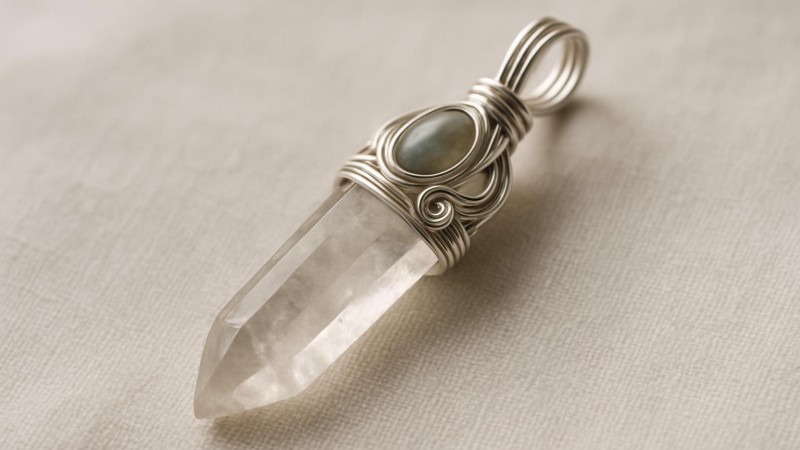
Introduction: The Beauty of Wire Wrapped Pendants
Few jewelry pieces are as captivating as a wire wrapped crystal pendant. Whether you're drawn to the natural shimmer of raw stones or the intricate artistry of wirework, these pendants combine elegance, creativity, and personal meaning. Making your own pendant allows you to express your unique style while crafting something timeless and personal. In this guide, we’ll walk through every step of how to make a simple wire wrapped crystal pendant—from choosing your materials to adding the finishing touches.
Why Make Your Own Wire Wrapped Pendant?
Creating your own jewelry is more than a hobby—it’s a way to connect with the materials you use and the energy they represent. Many artisans find that handcrafting a pendant brings a sense of calm and satisfaction. Plus, you can customize every detail, from the wire type to the gemstone shape, ensuring your design perfectly matches your taste or intention.
Wire wrapping is also beginner-friendly. With just a few tools and supplies, you can create professional-looking pendants in a short time. It’s an ideal project for anyone who loves working with natural stones like amethyst beads or quartz points.
Materials and Tools You’ll Need
Essential Materials
- Crystal or Stone: Choose a stone that inspires you. Raw crystals, tumbled stones, or polished cabochons all work beautifully.
- Jewelry Wire: Use copper, silver-plated, or sterling silver wire. A 20- to 24-gauge wire is ideal for wrapping medium-sized stones.
- Wire Cutters: For trimming excess wire cleanly.
- Round-Nose Pliers: Perfect for making loops and curves.
- Flat-Nose Pliers: Useful for holding and adjusting wire without marring the surface.
- Optional Embellishments: Add small accent beads, such as freshwater pearls, for a touch of luxury.
Optional Tools
- Ruler or measuring tape to gauge wire lengths.
- File or nylon jaw pliers to smooth sharp ends.
- Mandrel or pen barrel to shape consistent loops.
Choosing the Right Stone
When selecting your stone, consider both its visual appeal and its traditional symbolism. In folklore, crystals have long been associated with specific energies or qualities. For example, amethyst is traditionally believed to promote calm and clarity, while rose quartz is often linked with love and compassion. Whether or not you subscribe to these beliefs, choosing a stone that resonates with you personally will make your pendant more meaningful.
For beginners, stones with a defined shape—like teardrops or ovals—are easier to wrap securely. Avoid stones that are too slippery or irregular until you gain confidence in your technique.
Preparing the Wire
Before you begin, cut a piece of wire long enough to wrap around your stone several times, plus extra for forming loops and decorative twists. A good rule of thumb is to start with about 20–25 inches of wire for a medium-sized pendant. Straighten the wire gently with your fingers or by running it through your flat-nose pliers to remove kinks.
Step-by-Step Guide to Making Your Pendant
Step 1: Secure the Base
Hold your stone upright and position the midpoint of the wire behind it. Bring both wire ends up along the sides so they meet at the top of the stone. Twist the wires together two or three times to create a tight neck. This forms the base for your bail (the loop that the chain will pass through).
Step 2: Create the Bail Loop
Using your round-nose pliers, bend the twisted wire into a small loop. This will be the top loop of your pendant. Wrap one of the wire ends around the base of the loop two or three times to secure it. Trim any excess with your wire cutters.
Step 3: Wrap the Stone
With the remaining wire, begin wrapping around the stone’s body. Follow its natural curves and edges, crossing the wire artistically to create a secure cage. The goal is to hold the stone firmly while showcasing its natural beauty. Avoid covering too much of the surface—less is often more when it comes to highlighting crystal features.
Keep the wire snug but not overly tight; too much pressure can crack delicate stones like opalite or fluorite. If you’re working with harder stones such as quartz or agate, you can apply slightly more tension for a crisp finish.
Step 4: Add Decorative Details
Once the stone feels secure, you can add flourishes by twisting or spiraling the wire ends. Small loops, coils, or tiny accent beads like jump rings can add texture and dimension. For a minimalist look, keep the design clean and symmetrical. For a bohemian feel, embrace asymmetry and organic lines.
Step 5: Finishing Touches
Check all edges to ensure there are no sharp ends. Use your pliers to tuck in any stray wire. You can lightly polish the wire with a soft cloth to remove fingerprints and restore shine. Thread your pendant onto a cord, ribbon, or chain, and admire your creation!
Tips for Success
- Practice on inexpensive wire first. Copper is perfect for beginners—it’s affordable and easy to manipulate.
- Work slowly and deliberately. Patience ensures cleaner, more symmetrical wraps.
- Use tools with smooth jaws. They prevent scratches on your wire or stone.
- Experiment with different gauges. Thicker wire (lower gauge) provides structure, while thinner wire is great for detailing.
- Keep your workspace organized. A tidy setup helps prevent tangles and mistakes.
Creative Variations
Once you’ve mastered the basic technique, try experimenting with more advanced designs. You can combine multiple stones in one pendant, incorporate small charms, or create layered wire patterns. Adding a few wire wrappers or gemstone chips along the frame can make your piece more intricate and eye-catching.
Another idea is to wrap your stone in mixed metals—try alternating silver and copper wire for a striking contrast. You can also oxidize the wire using a chemical patina for a rustic, antique finish.
Caring for Your Wire Wrapped Jewelry
To keep your pendant looking its best, store it in a dry, soft-lined jewelry box. Avoid exposing it to harsh chemicals, perfumes, or prolonged moisture. If it tarnishes, gently clean it with a polishing cloth or mild jewelry cleaner safe for your wire type. Never use abrasive materials on soft stones or delicate wires.
Traditional and Symbolic Meanings of Crystals
Throughout history, people have attributed special meanings to gemstones. While these associations are symbolic rather than scientific, they add cultural and personal significance to your creations. For instance:
- Amethyst: Traditionally associated with serenity and intuition.
- Rose Quartz: In folklore, linked with love and emotional balance.
- Citrine: Historically regarded as a stone of abundance and positivity.
- Clear Quartz: Often seen as a universal amplifier of intention in spiritual traditions.
Choosing a stone with a story that resonates with you can make your pendant not only beautiful but also meaningful.
Design Inspiration from Nature
Nature is a wonderful muse for jewelry design. Think about the organic lines of vines, the symmetry of leaves, or the flow of water. Try wrapping your wire in shapes that mimic natural patterns—gentle spirals or branching lines can evoke the feeling of growth and movement. Pairing your crystal with small decorative beads like amethyst beads can enhance the overall composition and color harmony.
Why Buy Supplies from PebbleBead
When crafting jewelry, quality materials make all the difference. PebbleBead offers a wide selection of natural gemstones, high-quality wire, and professional-grade findings for both beginners and seasoned artisans. Whether you’re looking for unique stones or the perfect finishing touches, PebbleBead provides the inspiration and supplies you need to bring your vision to life.
Conclusion: Your Personal Touch
Making a simple wire wrapped crystal pendant is an art form that combines technique, creativity, and self-expression. With each twist and turn of the wire, you create something entirely your own—a wearable reflection of your craftsmanship and personality. Whether you craft pendants as gifts, for your own collection, or as part of a jewelry-making business, each piece tells a story. Start with a single stone, follow your intuition, and let your creativity shine through every wrap.

Leave a Comment