

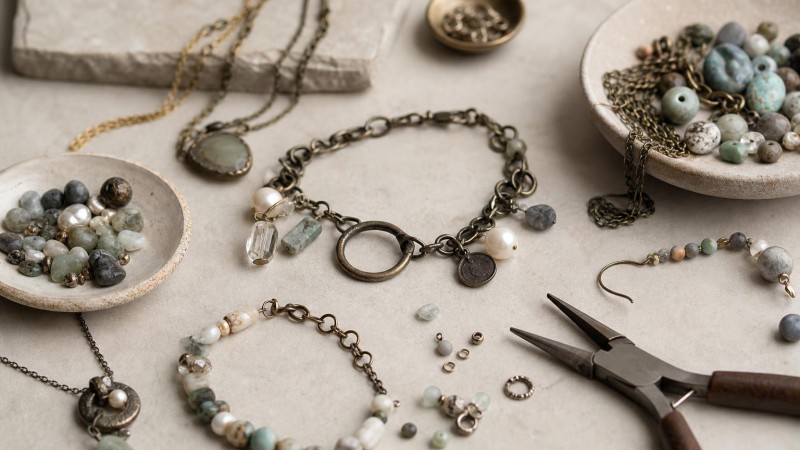
Sustainable crafting is more than a passing trend. For many jewelry makers, it is a practical, creative way to reduce waste while designing pieces with real personality. If you are new to jewelry making, upcycling is one of the easiest places to begin. You do not need a large studio, expensive equipment, or years of experience. Often, all it takes is a small collection of saved materials, a few basic tools, and the willingness to see everyday objects in a new way.
Upcycled jewelry turns overlooked items into wearable designs. An old button can become a pendant. A broken necklace can supply beads for earrings. Fabric scraps, vintage chains, shells, keys, and even single unmatched earrings can all become part of something fresh. The result is jewelry that feels thoughtful, one of a kind, and connected to a more mindful way of making.
For beginners, upcycling also lowers the pressure. Since you are starting with found or repurposed materials, the process feels experimental rather than precious. That freedom can help you learn basic techniques, discover your personal style, and build confidence. If you enjoy working with natural elements, you can also combine reclaimed parts with supplies like amethyst beads or stone chips to add color and texture while keeping the project grounded in a handcrafted look.
What Is Upcycled Jewelry?
Upcycled jewelry is made by transforming existing items or leftover materials into new accessories with a different purpose. Unlike simple reuse, upcycling usually involves a creative redesign. The original object is not just used again in the same form. Instead, it becomes part of a new piece, often with improved visual appeal or function.
In jewelry making, upcycling can include broken costume jewelry, vintage findings, fabric remnants, packaging materials, buttons, charms, watch parts, sea glass, and natural pieces such as wood or shells. It can also mean refreshing jewelry you already own but no longer wear. A long necklace may become a layered bracelet. A lone earring can turn into a zipper pull, pendant, or bag charm.
This approach supports a more sustainable craft practice because it keeps usable materials in circulation for longer. It also encourages slower, more intentional design choices. Instead of constantly buying something new, makers learn to evaluate what they already have and imagine new possibilities.
Why Beginners Often Love Upcycled Projects
Many beginners are drawn to upcycled jewelry because it is approachable and forgiving. Traditional jewelry making can sometimes feel technical at first, especially when you are learning how to use pliers, attach clasps, or choose the right wire and findings. Upcycled projects simplify that learning curve by giving you flexible materials to experiment with.
Lower material waste: You can practice techniques without worrying about ruining expensive supplies.
Built-in character: Vintage pieces, textured objects, and natural elements already have visual interest.
Creative freedom: There are fewer rules, which makes it easier to try new combinations.
Meaningful results: Reworking old items can add personal history and storytelling to your jewelry.
For new makers, this can be especially encouraging. Instead of aiming for perfection, you can focus on design, balance, color, and wearability.
Basic Tools for Sustainable Jewelry Making
You do not need a large toolkit to get started. A few core supplies will help you clean, connect, and finish your projects neatly.
Round-nose pliers for making loops
Chain-nose pliers for gripping small parts
Flush cutters for trimming wire
Jewelry adhesive for select mixed-media projects
Beading wire, elastic cord, or craft wire
Ear wires, clasps, and jump rings
Bead mats or small trays for sorting components
It is also helpful to keep a soft polishing cloth, a small container for tiny findings, and a notebook where you can sketch project ideas. If you enjoy wrapping irregular objects like sea glass or stones, simple wire wrappers or beginner-friendly wire jigs can make shaping easier while you learn.
How to Source Materials for Upcycled Jewelry
One of the most exciting parts of sustainable crafting is finding materials. Start by looking at what you already own. Broken necklaces, outdated bracelets, single earrings, and loose beads often have more potential than they seem to at first glance.
Check Your Own Jewelry Box
Sort items into categories such as chain, beads, charms, pendants, clasps, and decorative components. Even if a piece is beyond repair, the individual parts may still be useful. A damaged bracelet might provide spacers, links, or accent beads for a new project.
Save Craft Leftovers
Keep broken bits from previous projects, short lengths of chain, wire offcuts, and extra findings. Small leftovers are perfect for earrings, charm clusters, and test pieces. Over time, these scraps become a useful design library.
Explore Secondhand Sources
Thrift shops, flea markets, antique stalls, and household donation boxes can all be rich places to find vintage costume jewelry, buttons, scarves, brooches, and decorative trims. Look for sturdy materials, interesting shapes, and reusable hardware. Tarnish or faded finishes are not always a problem if the structure is sound.
Use Natural and Found Elements Carefully
Sea glass, driftwood, shells, seed pods, and smooth stones can bring organic beauty to upcycled jewelry. Make sure any found materials are cleaned, dried, and ethically collected where permitted. If you are combining reclaimed components with classic jewelry supplies, a few freshwater pearls or neutral stone beads can create a balanced contrast between rustic and refined.
Easy Upcycled Jewelry Ideas for Beginners
If you are just starting out, choose projects that teach one or two techniques at a time. That way, you build skills without becoming overwhelmed.
1. Broken Necklace to Layered Bracelet
A broken necklace is one of the simplest materials to repurpose. Measure your wrist, separate usable chain sections or bead strands, and reconnect them into a multi-strand bracelet. Add a clasp, test the fit, and finish with a small charm if you like.
This project teaches basic assembly, length planning, and closure attachment. It also shows how a damaged item can become something more versatile.
2. Button Earrings
Flat vintage buttons make charming earrings. Choose lightweight buttons with appealing color, texture, or pattern. Glue earring posts to the back using jewelry-safe adhesive, or attach dangles through existing holes with wire for a more handmade look.
Buttons are great for practicing pair matching and proportion. They also work well with fabric scraps or tiny bead accents.
3. Fabric-Wrapped Bangles
Take an old plain bangle or rigid bracelet form and wrap it with strips of fabric from worn clothing, scarves, or leftover sewing projects. Secure the beginning and end neatly with adhesive or stitching. You can add beads, charms, or small stitched embellishments for extra detail.
This is an excellent introduction to texture in jewelry design. It is also a smart way to use sentimental fabrics that are too small for larger sewing projects.
4. Single Earring Pendant
If you have one beautiful earring left from a lost pair, turn it into a pendant. Add a bail or a wrapped loop, then hang it from cord or chain. Ornate clip-ons, gemstone drops, and vintage dangles are especially well suited to this idea.
This project is ideal for beginners because it requires minimal materials while producing a polished result.
5. Charm Cluster Earrings
Gather tiny leftover pieces such as beads, chain fragments, mini keys, metal tags, or shell chips. Combine them into asymmetrical or matched charm clusters on earring hooks. Keep the weight light and the movement balanced.
Charm clusters help you learn composition. You begin to see how shape, shine, and spacing influence the final look.
6. Sea Glass or Stone Wrap Pendants
If you have smooth found pieces without drilled holes, wire wrapping is a beginner-friendly way to transform them into pendants. Start with simple cage-style wraps and practice even tension. Irregular shapes often look especially appealing because the wire follows their natural outlines.
When using crystals or natural stones, some makers like to choose varieties connected to symbolism. For example, in folklore, quartz was often associated with clarity, while ancient cultures regarded amethyst as a stone of balance and reflection. These traditional associations can add storytelling value, even when your main goal is design.
Design Tips That Make Upcycled Jewelry Look Intentional
The difference between a random collection of parts and a beautiful finished piece often comes down to editing. Upcycled jewelry looks best when the design feels deliberate.
Limit Your Color Palette
Choose two or three main colors and repeat them throughout the piece. This creates harmony, even when your materials come from very different sources. If your reclaimed items are visually busy, use neutral spacers or plain metal findings to calm the design.
Repeat a Shape or Texture
If you use one round element, consider repeating that shape elsewhere. The same applies to hammered metal, faceted surfaces, or soft organic textures. Repetition helps tie mixed materials together.
Balance Old and New
Sometimes an entirely reclaimed piece can feel chaotic. Mixing in a few clean, consistent components such as new ear wires, clasps, cord, or bead caps can elevate the overall finish. The goal is not to hide the upcycled origin, but to support it with reliable structure.
Pay Attention to Scale
Large components can overpower delicate findings, while tiny beads may disappear next to bold charms. Lay out your design before assembling it. Step back and look at the piece from a short distance to judge visual balance.
Common Beginner Mistakes to Avoid
Every jewelry maker learns through trial and error, but a few simple checks can save time and frustration.
Ignoring wearability: A piece may look interesting but feel too heavy, sharp, or noisy to wear comfortably.
Using weak connections: Always test loops, knots, adhesive joins, and clasps before calling a project finished.
Overloading the design: Not every found object needs to go into one piece. Leave room for the eye to rest.
Skipping cleaning: Dust, residue, and tarnish can affect both appearance and durability.
Forgetting material compatibility: Some glues, wires, or finishes work better with certain surfaces than others.
A beginner-friendly habit is to make a test arrangement first. Place your materials on a bead mat, photograph the layout, then adjust spacing and proportions before assembly.
How to Clean and Prepare Upcycled Materials
Preparation matters. Start by sorting pieces into metal, glass, fabric, plastic, and natural materials, since each category may need different care. Wipe metal findings with a soft cloth. Wash glass and non-porous pieces gently with mild soap and water, then dry them thoroughly. Fabric components should be checked for fraying, fading, or odor before use.
Be cautious with vintage items that have glued stones, painted finishes, or delicate coatings. Harsh cleaning can damage them. When in doubt, test a hidden area first. Proper preparation not only improves appearance but also helps your finished jewelry last longer.
Building a Sustainable Crafting Habit
Sustainability in jewelry making is not about perfection. It is about making more conscious choices over time. Upcycling is one part of that practice, but there are several other habits that can support it.
Store scraps by color, material, or size so they are easy to use later
Plan projects before buying new supplies
Choose versatile findings that work across many designs
Repair jewelry when possible instead of discarding it
Use durable materials for pieces meant for frequent wear
Many makers find that sustainable habits actually improve creativity. Constraints can sharpen design thinking. When you work with what you have, you often notice combinations you might otherwise miss.
When to Mix Upcycled Parts with New Jewelry Supplies
There is no rule that says every element must be reclaimed. In fact, many of the best beginner projects combine old and new materials. Upcycled focal pieces can benefit from fresh cord, sturdy clasps, matching ear wires, or reliable stringing materials. This approach helps ensure the jewelry is both attractive and functional.
For example, a salvaged pendant might look better on a new chain. A bracelet made from reclaimed beads may feel more secure with a new clasp. If you like the idea of blending natural elements into your projects, gemstone beads, simple metal findings, and neatly matched spacers can provide a professional-looking framework. Shops like PebbleBead can be useful when you want quality components to complement your repurposed materials without losing the handmade spirit of the piece.
Final Thoughts: Start Small and Keep Experimenting
Upcycled jewelry is one of the most welcoming entry points into sustainable crafting. It invites curiosity, resourcefulness, and play. You do not need to master every technique at once, and you do not need perfect materials to make something beautiful. A broken chain, an old button, or a handful of mismatched beads can become the start of your next favorite project.
If you are a beginner, start with one simple idea and one basic skill. Turn a single earring into a pendant. Rework an old necklace into a bracelet. Wrap a found stone and learn how wire moves. As your confidence grows, you will begin to see possibilities everywhere.
The beauty of upcycled jewelry lies not only in its finished form, but in the mindset behind it. Making something new from something overlooked is creative, practical, and deeply satisfying. With a few tools, a thoughtful eye, and a willingness to experiment, you can build jewelry that feels personal, expressive, and more connected to a mindful way of making.

Leave a Comment