

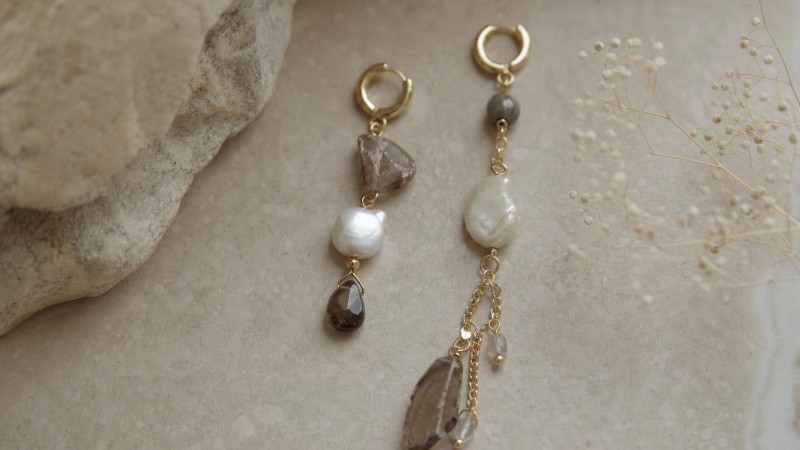
What Makes Asymmetrical Earrings So Compelling?
Asymmetrical earrings have moved from niche fashion experiment to must-know jewelry trend, and it is easy to see why. They feel fresh without being difficult, artistic without being costume-like, and expressive without requiring a complete style overhaul. In a year defined by personal taste, creative layering, and a return to thoughtful accessories, asymmetrical earrings offer the perfect balance of individuality and wearability.
Unlike perfectly matched pairs, asymmetrical earrings create intentional contrast. That contrast might be subtle, such as a small hoop on one side and a longer drop on the other, or more dramatic, such as different gemstones, shapes, textures, or lengths. The result catches the eye immediately. It gives an outfit movement, personality, and a modern edge.
For jewelry lovers, makers, and collectors, this trend is especially exciting because it opens the door to experimentation. A pair no longer has to mirror itself exactly to feel complete. Instead, each earring can play a distinct role while still belonging to the same visual story.
That freedom is one reason asymmetrical designs have become such a defining accessory. They invite self-expression, make styling more playful, and work beautifully across fine jewelry, handmade designs, and everyday fashion pieces.
Why This Trend Feels So Current Right Now
Fashion cycles often swing between order and disruption. After years of ultra-minimal matching sets and carefully coordinated accessories, asymmetry feels like a natural next step. It introduces visual interest while still looking polished. In other words, it offers a way to look current without appearing overly styled.
Another reason for the trend’s popularity is the growing appreciation for curated individuality. More people want jewelry that reflects mood, taste, and creativity rather than strict fashion rules. Asymmetrical earrings fit that shift perfectly. They suggest confidence and intention, as if the wearer chose each detail on purpose rather than simply following convention.
Social media has also helped this look gain momentum. Close-up styling videos, ear stack inspiration, and handmade jewelry content all highlight how effective asymmetry can be. Even a simple outfit can look more editorial when paired with mismatched earrings.
At the same time, the rise of artisan and small-batch jewelry has encouraged more experimental design. Materials such as freshwater pearls alongside raw stones, hammered metal, chain details, and mixed finishes make asymmetry feel organic rather than random. It is less about breaking rules for the sake of it and more about composing contrast in a thoughtful way.
The Design Principles Behind Great Asymmetry
The best asymmetrical earrings do not look accidental. They may be different, but they still feel connected. That sense of connection usually comes from one or more shared elements: color, material, proportion, motif, texture, or metal tone.
Balance Matters More Than Matching
Symmetry depends on sameness. Asymmetry depends on balance. For example, one earring might be a delicate stud while the other is a long drop, but if both feature the same stone or similar lines, they still feel harmonious. Visual weight is the key idea. A larger earring on one side can be balanced by a smaller but brighter or more intricate piece on the other.
Repetition Creates Cohesion
Repeating one detail across both earrings can tie the pair together beautifully. That detail might be a shared gemstone, a similar wire shape, matching metal, or a recurring motif such as stars, leaves, bars, or circles. Jewelry makers often use components like jump rings and chains to echo shape and movement while keeping the overall look intentionally uneven.
Contrast Adds Energy
Contrast is what gives asymmetrical earrings their fashion-forward appeal. A polished hoop next to a textured charm drop, a pearl paired with geometric metal, or a faceted bead beside a sleek line all create tension that feels modern. Strong design comes from making those contrasts feel deliberate rather than disconnected.
Different Types of Asymmetrical Earrings to Try
One reason this trend has such broad appeal is that it can suit many personal styles. Whether your look is minimalist, romantic, bohemian, sculptural, or classic, there is an asymmetrical approach that can work for you.
Subtle Mismatch
This is the easiest entry point. Think two earrings in the same family with one small variation, such as different lengths, reversed stone placement, or one extra charm. It feels refined and wearable, especially for everyday outfits.
Stud-and-Drop Pairing
One side features a simple stud while the other includes a dangling element. This combination flatters many face shapes and creates movement without becoming overwhelming. It also works well with gemstone accents such as amethyst beads for a touch of color and sparkle.
Mixed Motif Pairing
These designs combine two related but different symbols or forms. For instance, a moon on one side and a star on the other, or a bar earring paired with a circle drop. The theme stays unified while the details remain distinct.
Length Contrast
One short earring and one elongated earring can look striking, especially with sleek metal lines, chain tassels, or bead drops. This style tends to read as bold, contemporary, and editorial.
Material Contrast
Material-based asymmetry is especially popular in handmade jewelry. You might see metal paired with pearls, smooth stones contrasted with hammered findings, or faceted beads offset by organic shapes. Components assembled by skilled wire wrappers often make these contrasts feel intentional and elegant.
Why Asymmetrical Earrings Work So Well With Natural Materials
Natural stones, pearls, shell, and artisan metalwork are ideal for asymmetrical designs because they already carry subtle variation. No two pearls are exactly alike. Stone beads differ in pattern, tone, and translucency. Hand-shaped wire and hammered metal have a character that machine-perfect pieces cannot fully replicate.
That natural irregularity adds charm. Instead of fighting variation, asymmetrical earrings celebrate it. A baroque pearl drop on one side and a faceted gemstone on the other can feel beautifully composed because both materials share an organic quality.
This is also where gemstone jewelry becomes especially expressive. Color can act as the link between unlike shapes, or shape can unify unlike colors. A green stone and a pearl may not match in the traditional sense, but they can still look deeply harmonious when their sizes, finishes, or settings relate to each other.
In folklore and historical adornment traditions, different stones were often associated with symbolism, status, or meaning. Today, some wearers still enjoy choosing gemstones based on traditional associations, birth months, or color stories. When used in asymmetrical earrings, those stones can create a design that feels both personal and artful.
How to Style Asymmetrical Earrings With Confidence
The biggest reason some people hesitate to try this trend is the worry that mismatched earrings will look unfinished. The secret is simple: style them with intention. Once the rest of the look supports the contrast, asymmetry reads as purposeful and chic.
Start With a Clean Base
If your earrings are doing something visually interesting, let them have space. Necklines that are open, simple, or structured often work well because they do not compete for attention. Solid colors and minimal prints also allow the earrings to stand out.
Repeat a Detail Elsewhere
If one earring includes a pearl or a colored stone, echo that material somewhere else in your accessories. A ring, bracelet, or pendant with a similar tone can make the look feel cohesive without becoming overly matched.
Consider Your Hairstyle
Asymmetrical earrings shine when they can be seen clearly. Tucked hair, a low bun, a sleek ponytail, or one side pinned back can help reveal the contrast. If your hair is worn down, choose earrings with enough length, sparkle, or movement to remain visible.
Build Around One Statement Side
In many asymmetrical pairs, one earring naturally becomes the focal point. Let that happen. The second earring does not need to compete equally; it only needs to contribute balance. This approach often results in the most sophisticated styling.
Keep Other Jewelry Intentional
Because asymmetrical earrings already introduce variety, it helps to be selective with additional accessories. A slim chain, a stack of understated rings, or a simple cuff can support the look without crowding it. If you love layered jewelry, use a consistent metal tone to keep the overall effect polished.
Asymmetrical Earrings for Different Occasions
Another reason this trend has become essential is its versatility. Asymmetrical earrings can shift easily from casual daytime wear to evening styling depending on materials, scale, and finish.
Everyday Wear
For daily outfits, choose subtle asymmetry: a hoop and a charm, two related studs, or a short-and-long pair in the same metal. These designs feel easy but still distinctive.
Work and Professional Settings
Refined asymmetry works beautifully in professional wardrobes. Stick to elegant forms, controlled proportions, and quality materials. Think sleek gold-tone lines, petite pearls, or understated stone drops rather than oversized novelty shapes.
Special Events
Weddings, dinners, gallery openings, and celebrations are ideal moments for more dramatic contrast. Long chain drops, sculptural metal shapes, and luminous stones can elevate even the simplest outfit. Components like ear wires with secure, elegant finishes also help create a polished final piece.
Creative Personal Style
If your wardrobe already leans artistic, asymmetrical earrings may become a signature. Mix gemstone colors, combine textures, or wear designs that reference celestial, botanical, or abstract forms. The key is to create dialogue between the two sides, not sameness.
Tips for Jewelry Makers Designing Asymmetrical Earrings
For makers, this trend offers a wonderful opportunity to explore composition in a new way. Designing asymmetrical earrings requires both freedom and discipline. The difference between compelling and chaotic often comes down to proportion and editing.
Choose one unifying element first, such as metal tone, stone type, shape family, or motif.
Vary only one or two major features at a time, such as length and texture, while keeping other details consistent.
Lay both earrings side by side during the design process to compare visual weight.
Test the pair from a distance. If they look unrelated from arm’s length, add a linking detail.
Use movement thoughtfully. Chain, charms, and drops can add drama, but too many mobile parts may compete.
Finish carefully. Clean loops, balanced drape, and well-chosen findings give experimental designs a professional look.
Makers working with beads often find that asymmetry is a great way to use special focal components that do not have an exact match. A singular pendant-like bead, an irregular pearl, or a carved stone can become the hero of one side while a simpler coordinating element balances the other.
Common Mistakes to Avoid
Asymmetry may look effortless, but effective styling and design still benefit from a few guidelines.
Too much difference: If the earrings share no common thread, they may look like an accidental mismatch.
Ignoring proportion: An extremely heavy visual element on one side with nothing to balance it can feel awkward.
Overloading the outfit: Statement earrings plus highly ornate necklaces, busy prints, and multiple bold accessories can make the look feel crowded.
Choosing discomfort over style: Dramatic earrings should still feel wearable. Excessive weight can limit how often you reach for them.
Forgetting cohesion: Even bold designs need at least one repeated detail to look intentional.
Why This Trend Has Staying Power
Some trends flare up quickly and disappear just as fast. Asymmetrical earrings seem different. Their appeal is rooted in broader shifts that are likely to endure: personal expression, handcrafted character, and a move away from rigid rules in accessorizing.
They also adapt well. A minimalist can wear subtle asymmetry in polished metal. A romantic dresser can choose pearls and soft gemstone drops. A maximalist can embrace sculptural silhouettes and color contrast. The trend is not limited to one aesthetic, which gives it longevity.
Perhaps most importantly, asymmetrical earrings remind us that style does not have to be perfectly mirrored to feel complete. A little variation can make jewelry more dynamic, more personal, and more memorable.
Final Thoughts
Asymmetrical earrings are the essential trend of the year because they capture what modern jewelry lovers want most: originality, versatility, and personality. They offer a fresh alternative to classic matched pairs while remaining elegant, wearable, and surprisingly easy to style.
Whether you are shopping for your next favorite pair, refreshing your accessory wardrobe, or creating new designs at your workbench, this trend invites you to think differently about balance and beauty. Start small with subtle variation, or go bold with length, texture, and gemstone contrast. Either way, asymmetry gives jewelry a sense of movement and individuality that feels unmistakably current.
For anyone inspired to explore materials, findings, and natural elements for this look, PebbleBead offers plenty of creative possibilities. And that may be the real reason asymmetrical earrings matter right now: they do more than complete an outfit. They tell a more interesting story.

Leave a Comment